

How a Tire Plug Can Save Your Day and Your Wallet
A tire plug is a simple tool that can help fix a small hole in your tire quickly and safely. When a tire gets a tiny puncture from nails or sharp objects, a tire plug can stop the leak without needing a full tire replacement. Using a tire plug is not just about saving money; it also keeps you safe on the road. Many drivers don’t realize that a quick repair with a tire plug can prevent a flat tire from turning into a big problem while driving.
Learning how to use a tire plug correctly is important for every car owner. A plug works best on small holes in the tread, and using it in the wrong place can be unsafe. By knowing the right way to insert a tire plug and what tools to use, you can handle minor tire problems without waiting for roadside help. A tire plug is an easy and practical solution, and understanding it can make driving less stressful and more secure.
What is a Tire Plug and How Does It Work?
A tire plug is a small, sticky piece of rubber that fills tiny holes in your tire to stop air from escaping. It works best when the puncture is in the tread area, not on the sidewall, because sidewall holes are dangerous and cannot be safely repaired with a plug. The plug is inserted into the hole using a special tool that pushes it deep enough to seal the leak. When done correctly, it can make your tire airtight again, so you can drive safely without worrying about a flat. Many people keep a tire plug kit in their car because it is a fast and easy way to handle small tire problems at home or on the road. Using a tire plug properly saves money and avoids the need for a full tire replacement, giving drivers peace of mind.
Step-by-Step Guide to Using a Tire Plug Safely
Using a tire plug safely starts with finding the exact spot where air is leaking. First, remove the object that caused the hole and clean the area. Next, use a reamer tool to make the hole ready for the plug. Then, thread the rubber plug through the insertion tool and push it into the hole until it is fully sealed. After that, pull the tool out carefully, leaving the plug in place, and trim any extra rubber that sticks out. Finally, inflate the tire to the recommended pressure and check for leaks by spraying water on the plugged area. Doing all these steps slowly and carefully ensures the tire plug will work properly and last longer, keeping you safe while driving.
Common Mistakes to Avoid When Using a Tire Plug
One of the biggest mistakes is using a tire plug on the wrong part of the tire, like the sidewall, which can cause dangerous blowouts. Another mistake is plugging a hole that is too large; tire plugs only work on small punctures. Not cleaning the hole before inserting the plug is also a common error because dirt can stop the plug from sealing the air properly. Using the wrong tools or pushing the plug in too shallow or too deep can make it fail. Some people also forget to check the tire pressure after plugging, which can lead to underinflated or overinflated tires. Avoiding these mistakes will make sure your tire plug repair is safe, reliable, and lasts longer on the road.
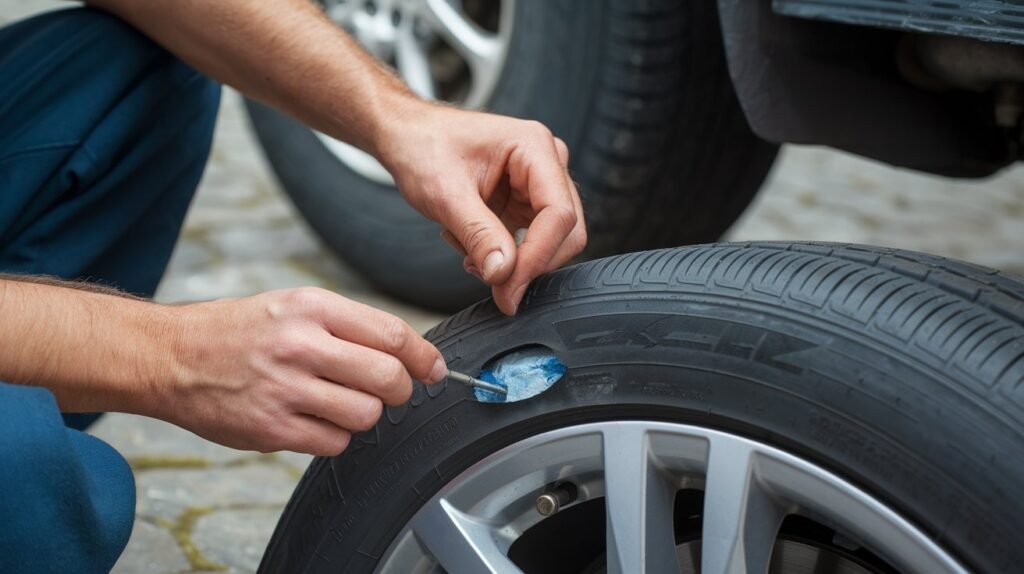
Tire Plug vs Tire Patch: Which One Should You Choose?
A tire plug is fast, easy, and works well for small punctures in the tread, while a tire patch is applied inside the tire and often lasts longer. Plugs are convenient for quick roadside repairs, but patches are better if the hole is large or the tire has more serious damage. Some repair kits even combine both a plug and a patch for the strongest fix. Choosing between a plug and a patch depends on the location and size of the hole. For small holes in the center of the tread, a tire plug is enough, but if the hole is big or the tire has been damaged multiple times, a patch or professional repair is safer. Knowing when to use each type ensures your tire stays reliable.
How Long Does a Tire Plug Last?
A tire plug can last for months or even years if it is done correctly and the tire is well maintained. Its lifespan depends on driving conditions, how fast you drive, and how well the plug was inserted. Checking the plug regularly for signs of wear or air leaks is important to keep your tire safe. Avoid hitting curbs or potholes too hard because this can damage the plugged area. Proper tire pressure and regular inspections will help the plug last longer. While a tire plug is not always permanent, it gives you time to use your tire safely without replacing it immediately, making it a practical and cost-saving solution for minor tire problems.
When You Should Not Use a Tire Plug
You should not use a tire plug if the hole is on the sidewall or shoulder of the tire because it is too dangerous to repair in those areas. Large punctures or multiple holes close together are also not suitable for tire plugs and need professional attention. If the tire has other damage like cracks or worn tread, a plug will not make it safe to drive. Driving at very high speeds on a plugged tire is also risky, so plugs are mostly for normal everyday driving. Knowing when a tire plug is not enough is important to avoid accidents and keep yourself and passengers safe. Using the right solution ensures your tire repair is both safe and effective.
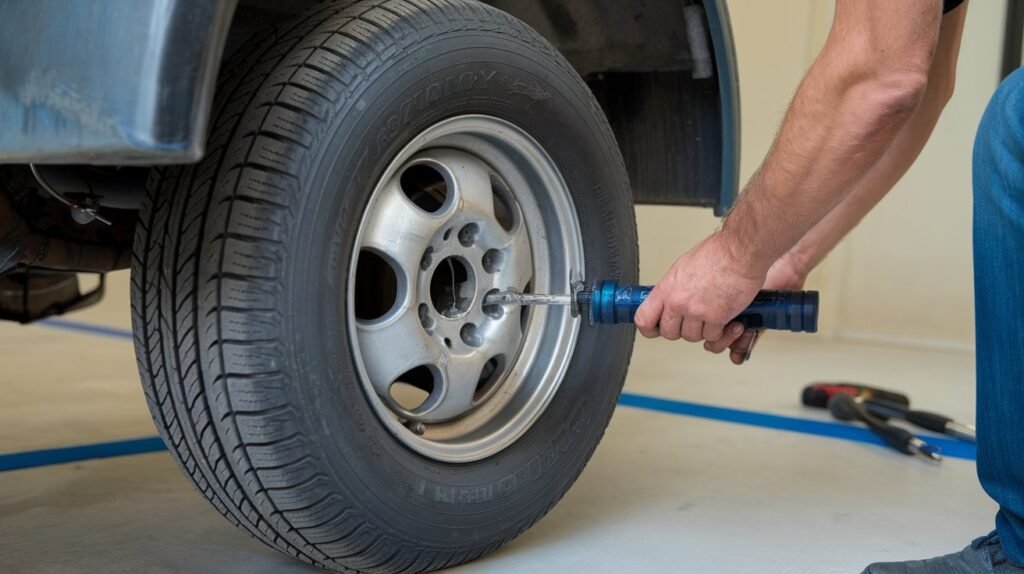
Tips to Keep Your Tires Healthy After a Plug
After plugging a tire, it is important to check the tire pressure regularly to make sure it stays at the correct level. Avoid driving on very rough roads or hitting curbs hard, as this can damage the repaired area. Rotate your tires as recommended to keep them wearing evenly, which also helps the plug last longer. Keep an eye on the plug to make sure it does not come loose or cause air leaks. Proper maintenance like cleaning your tires and inspecting for new punctures will keep your tires healthy and make your repair last longer. Simple habits like these help your tires stay safe and extend their life.
Conclusion
Using a tire plug is a smart way to fix small tire problems quickly and save money. It is easy to do if you follow the right steps and use the correct tools. By keeping a tire plug kit in your car, you can handle minor punctures without waiting for help and avoid dangerous flat tires.
Remember, tire plugs are only for small holes in the tread. Do not try to use them on big holes or sidewalls. Taking care of your tires after a plug, like checking air pressure and avoiding rough roads, will keep you safe. Learning how to use a tire plug correctly is a simple skill that every driver should know.
FAQs
Q: What is a tire plug?
A: A tire plug is a piece of rubber used to fill small holes in the tread of a tire to stop air from leaking.
Q: Can I use a tire plug on the sidewall?
A: No, tire plugs are only safe for small punctures in the tread, not on the sidewall.
Q: How long does a tire plug last?
A: A tire plug can last months or years if installed correctly and the tire is properly maintained.
Q: Do I need special tools for a tire plug?
A: Yes, a tire plug kit usually includes an insertion tool and a reamer to prepare the hole.
Q: Can a tire plug replace a professional repair?
A: No, tire plugs are for small punctures; large or multiple holes need professional repair.